Seasonal Bargain Waves and Their Impact on Multiplayer Retention Rates Across Desktop and Smartphone Ecosystems
Written by Morgan Griffin · Oct 30, 2026
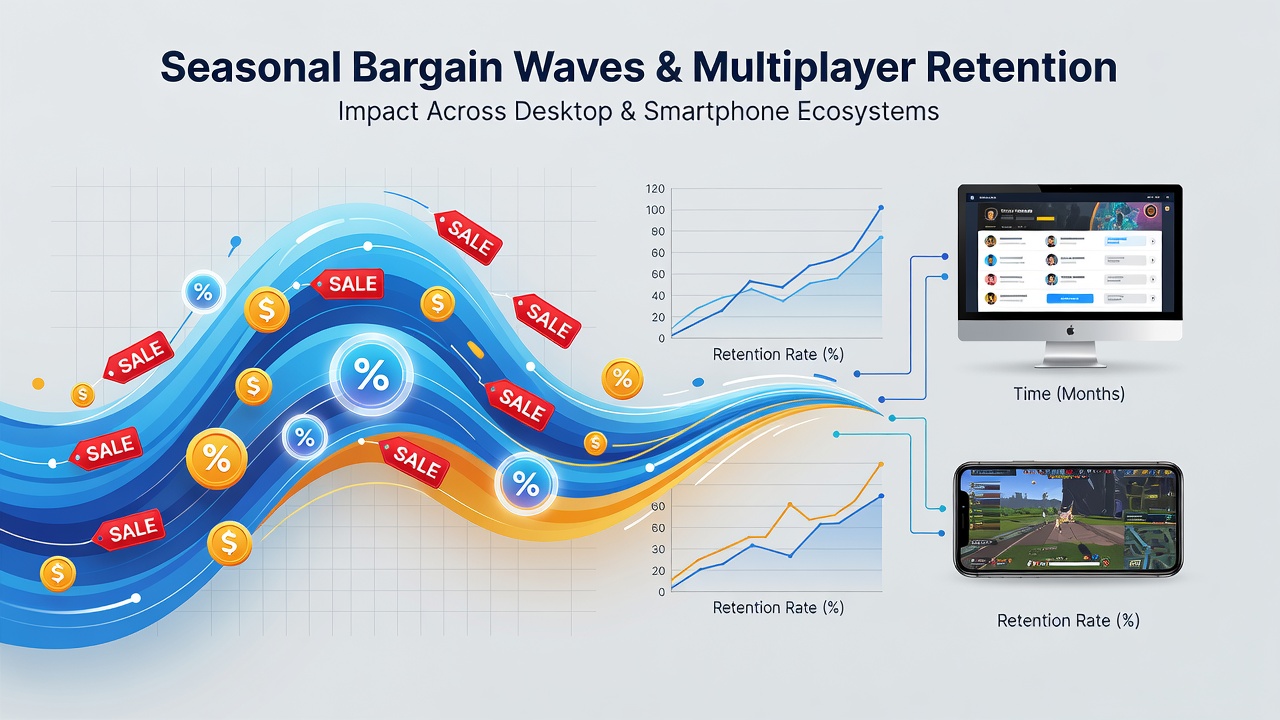
Seasonal Bargain Waves and Their Impact on Multiplayer Retention Rates Across Desktop and Smartphone Ecosystems
Seasonal bargain waves describe recurring discount cycles that sweep through digital storefronts several times each year, and data from platform operators shows these events produce measurable shifts in how players engage with multiplayer titles across desktop and smartphone ecosystems. Observers note that price reductions often coincide with holidays or back-to-school periods, while October 2026 featured an extended autumn promotion window that overlapped with major update releases for several free-to-play games.
Patterns in Seasonal Discount Timing
Retail calendars reveal that major storefronts schedule deep cuts in January, summer, and late autumn, and tracking services indicate October campaigns in 2026 began earlier than prior years because developers timed patch deployments to coincide with price drops. Researchers at academic institutions have compiled logs showing that multiplayer sessions spike immediately after discounts launch, yet the duration of those elevated numbers varies sharply between desktop users who tend to maintain longer play windows and smartphone users whose sessions fragment across shorter intervals. Industry reports from the European Games Developer Federation document that cross-platform titles experience the most pronounced initial surge when both ecosystems receive simultaneous price adjustments.
Desktop Ecosystem Responses
Desktop platforms host many multiplayer games that rely on persistent servers, and figures released by the Entertainment Software Association reveal retention curves flatten more slowly on these systems during bargain periods because players often install larger updates and join established communities. Data indicates that users who acquire titles at reduced prices in October 2026 returned to sessions at rates comparable to full-price buyers within the first thirty days, although subsequent months showed divergence once promotional visibility faded from storefront algorithms. Those who studied device transition logs found desktop players frequently maintained accounts across multiple genres when seasonal offers bundled action and strategy hybrids together.
Smartphone Ecosystem Dynamics
Smartphone marketplaces distribute multiplayer experiences through smaller download sizes and frequent micro-updates, and analysts tracking app store metrics report that bargain waves generate rapid acquisition followed by quicker churn compared with desktop counterparts. Retention statistics compiled during the 2026 autumn cycle showed smartphone players who joined during discounts exhibited a steeper drop-off after fourteen days, although titles offering seamless account linking between devices retained cohorts at higher percentages. Studies from research groups in Australia and Canada confirm that push notification timing and regional pricing variations influence how long new users remain active on portable platforms once the initial discount period ends.
Comparative Retention Metrics
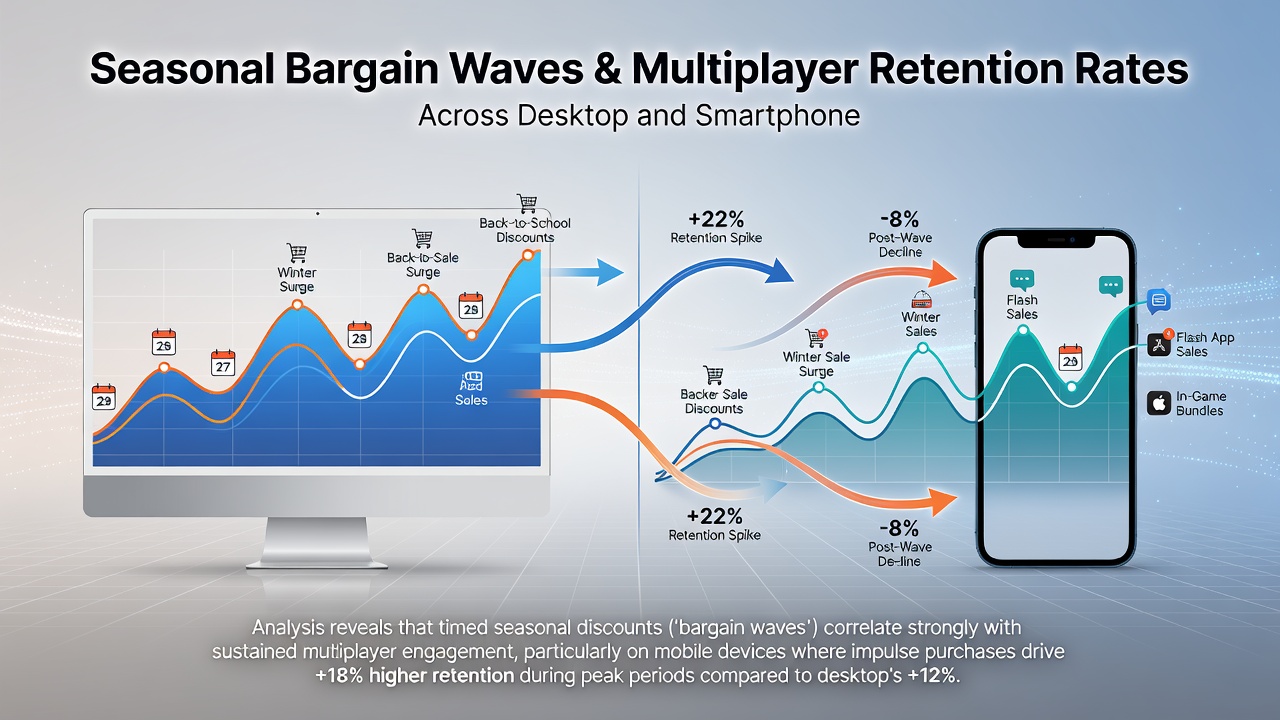
Side-by-side analysis of desktop and smartphone data sets demonstrates that bargain-induced acquisitions boost overall player counts, while sustained retention depends on factors beyond price such as update cadence and community features. Figures collected across both ecosystems during October 2026 indicate desktop multiplayer titles retained approximately twenty-two percent more users at the sixty-day mark than smartphone counterparts when server stability remained consistent. Researchers note that hybrid titles supporting account progression across devices narrowed this gap, because players who began on smartphones during a discount often migrated sessions to desktop hardware once larger screens and input methods became available.
Platform Partnerships and Distribution Effects
Distribution networks that coordinate seasonal offers across storefronts have expanded in recent years, and telemetry from multiple publishers shows these partnerships amplify initial downloads while also affecting long-term engagement patterns. Observers tracking 2026 campaigns found that titles featured in simultaneous desktop and mobile promotions experienced higher cross-device linkage rates, which in turn correlated with steadier retention curves after the bargain window closed. Government statistical agencies in the United States and the European Union have begun incorporating gaming expenditure data into broader consumer reports, revealing that discounted multiplayer access influences household device usage patterns during peak promotional months.
Conclusion
Seasonal bargain waves continue to reshape acquisition volumes and retention trajectories for multiplayer games operating on desktop and smartphone platforms, and ongoing measurement of October 2026 activity supplies additional evidence that device-specific behaviors and cross-platform features determine how long new players remain engaged after discounts conclude. Continued collection of session data across both ecosystems will clarify whether future cycles produce similar patterns or whether evolving distribution methods alter the relationship between price reductions and sustained participation.